



Sexual violence remains one of the most disturbing challenges facing modern society. While discussions often focus on crimes against women and children, reports of abuse involving animals have also raised serious concerns about broader issues relating to violence, accountability, and social attitudes.
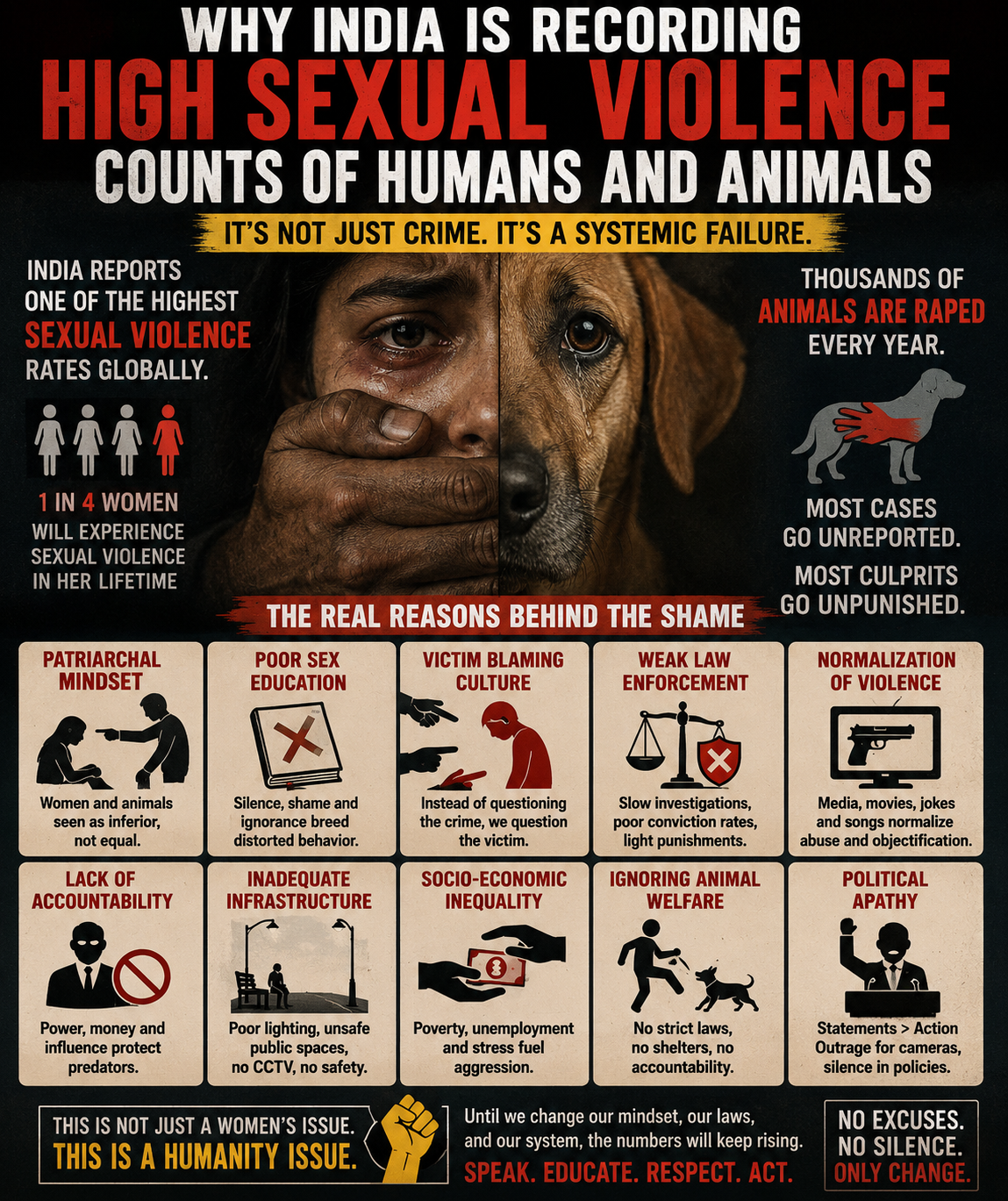
The image above highlights several factors frequently discussed by researchers, activists, and policymakers when examining why sexual violence continues to occur despite increasing public awareness and stricter laws.
One major concern is the persistence of harmful attitudes that normalize disrespect, objectification, or violence. Experts have long argued that education plays a crucial role in addressing these behaviors from an early age. Comprehensive awareness programs, healthy discussions about consent, and greater respect for both people and animals are often cited as essential steps toward prevention.
Another challenge is underreporting. Many victims fear stigma, social judgment, or retaliation, which can discourage them from coming forward. When crimes go unreported, offenders may escape accountability, creating a cycle that allows abuse to continue.
Law enforcement and the justice system also play a critical role. Delays in investigations, lengthy court proceedings, and low conviction rates can weaken public confidence and reduce the deterrent effect of legal consequences. Strengthening victim support services and ensuring timely justice remain important priorities.
Animal welfare advocates have similarly highlighted concerns about cruelty toward animals, arguing that stronger enforcement of animal protection laws and increased public awareness are necessary to address these crimes effectively.
The issue extends beyond crime statistics. It reflects broader social challenges involving education, accountability, cultural attitudes, and public responsibility. Lasting change requires cooperation between governments, schools, communities, law enforcement agencies, and citizens.
Ultimately, reducing sexual violence requires more than outrage after incidents occur. It requires consistent efforts to promote respect, empathy, accountability, and education at every level of society. Only through long-term commitment can meaningful progress be achieved.
The conversation must continue—not because it is comfortable, but because it is necessary.