Are Deepfakes Becoming India's Biggest Misinformation Threat? Experts Weigh In
Deepfakes are becoming increasingly realistic and accessible. Experts warn that AI-generated videos, voice clones, and synthetic media could pose growing risks to elections, public trust, cybersecurity, and online information in India.
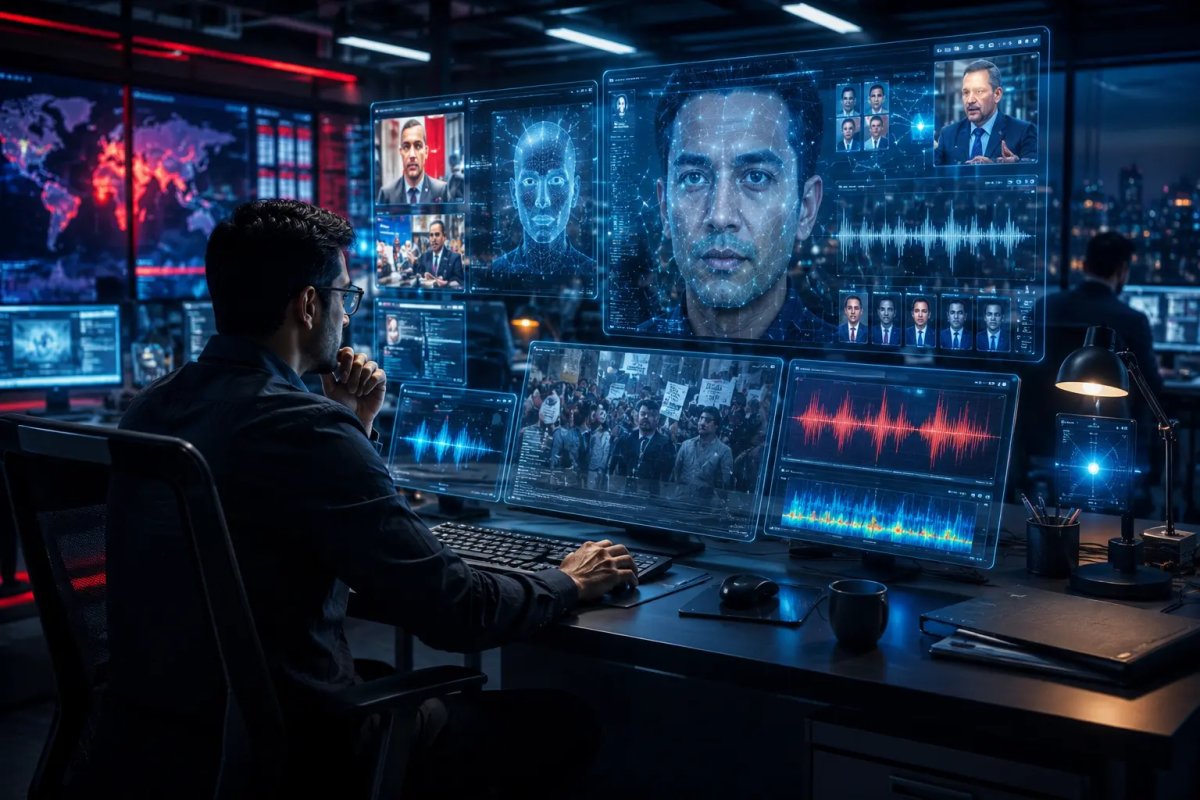
As AI Technology Advances, So Do Concerns About Digital Deception
Not long ago, manipulated photos and edited videos were relatively easy to identify. Obvious visual distortions, poor editing quality, and limited distribution channels often made misinformation easier to detect. Today, however, advances in artificial intelligence have dramatically changed the landscape.
Deepfakes—synthetic media created using AI to alter or generate realistic images, audio, and video—are becoming increasingly sophisticated. What began as a niche technological experiment has evolved into a powerful tool capable of creating convincing content that can mislead audiences, damage reputations, influence public opinion, and complicate efforts to verify information.
In India, concerns about deepfakes have intensified as social media usage expands, AI tools become more accessible, and misinformation campaigns grow more complex. Policymakers, cybersecurity experts, journalists, and researchers are now examining whether deepfakes could emerge as one of the country's most significant information integrity challenges in the years ahead.
Understanding Deepfakes
Deepfakes use machine learning techniques to create or manipulate media in ways that appear authentic.
These systems can generate realistic videos showing individuals saying things they never said, create synthetic audio that imitates real voices, or modify existing footage to change appearances and actions.
Recent advances in generative AI have significantly improved the quality of synthetic media. Many tools that once required advanced technical expertise are now available through consumer-friendly platforms, reducing barriers to creation.
While deepfake technology has legitimate applications in entertainment, education, accessibility, and creative industries, experts warn that the same tools can also be misused to spread misinformation or deceive audiences.
Why India Faces Unique Challenges
India's digital ecosystem presents both opportunities and vulnerabilities when it comes to deepfakes.
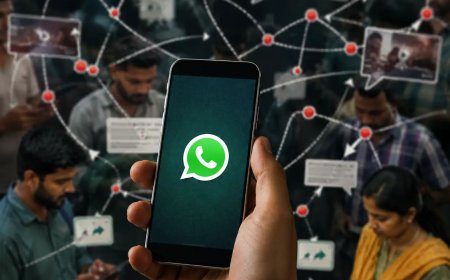
The country has one of the world's largest internet user bases, hundreds of millions of social media users, and a rapidly expanding digital economy. Information can travel across platforms at remarkable speed, often reaching large audiences before verification occurs.
India's linguistic diversity also adds complexity to content moderation and fact-checking efforts. Deepfakes can be produced in multiple languages and distributed through messaging platforms, social networks, and video-sharing services.
Experts note that misinformation does not need to convince everyone to be effective. Even limited exposure among targeted groups can influence perceptions, generate confusion, or amplify existing social and political divisions.
As AI-generated content becomes easier to create, the scale of potential misinformation campaigns may increase.
Political Deepfakes Draw Growing Attention
One area receiving particular scrutiny is political misinformation.
Around the world, election periods have become prime targets for manipulated media. AI-generated videos, cloned voices, and altered speeches can be used to create misleading narratives involving political leaders, candidates, parties, or public institutions.
India has already witnessed instances where AI-generated political content attracted significant public attention. Some cases involved digitally altered speeches, while others featured synthetic versions of public figures communicating messages in different languages.
Not all such content was intended to deceive. In some instances, campaigns disclosed the use of AI to expand outreach. However, experts caution that similar technology could also be used without disclosure, making verification more difficult.
The concern is not simply that deepfakes may convince viewers of false information. Researchers argue that widespread awareness of manipulated media can also create a "liar's dividend," where authentic content is dismissed as fake simply because deepfakes exist.
Celebrity and Public Figure Impersonation
Beyond politics, deepfakes have increasingly targeted celebrities, influencers, business leaders, and public figures.
Several high-profile incidents have highlighted how realistic synthetic videos and audio recordings can be used to spread false endorsements, impersonate individuals, or create misleading narratives.
Such content often gains traction because audiences are more likely to engage with recognizable personalities.
Experts warn that the reputational damage caused by deepfake content can occur rapidly, particularly when clips spread across multiple platforms before fact-checkers can respond.
The rise of synthetic impersonation has also raised questions about consent, privacy, and digital identity protection.
Financial Fraud and Cybercrime Risks
The threat posed by deepfakes extends beyond misinformation.
Cybersecurity specialists increasingly warn about the use of AI-generated voices and videos in fraud schemes.
Voice-cloning technology can potentially be used to impersonate executives, family members, customer service representatives, or public officials. Fraudsters may attempt to exploit trust by creating convincing synthetic communications designed to influence decisions or obtain sensitive information.
Financial institutions and security experts are responding by strengthening authentication measures and educating users about emerging risks.
As synthetic media becomes more realistic, traditional methods of verifying identity may become less reliable.
Why Detection Is Becoming More Difficult
Early deepfakes often contained obvious flaws.
Facial movements appeared unnatural, lip synchronization was inconsistent, and visual artifacts frequently revealed manipulation.
Modern systems have improved substantially.
Today's AI-generated content can exhibit realistic lighting, facial expressions, speech patterns, and voice characteristics. In many cases, casual viewers may struggle to identify manipulation without specialized tools or technical analysis.
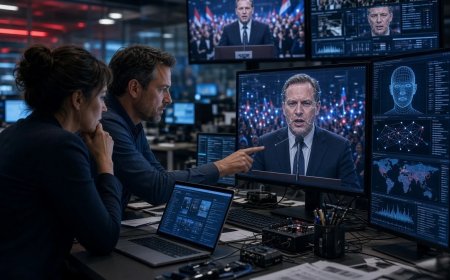
Researchers continue developing detection systems capable of identifying synthetic media through forensic analysis. However, experts describe the challenge as an ongoing technological arms race.
As detection methods improve, generation techniques also become more sophisticated.
This dynamic means no single technological solution is likely to eliminate the problem entirely.
The Role of Fact-Checkers and Journalists
As deepfakes become more common, verification processes are becoming increasingly important.
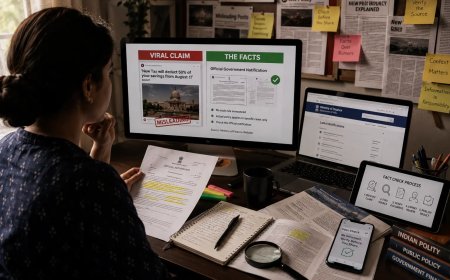
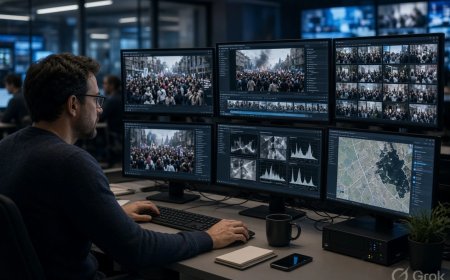
Fact-checkers and investigative journalists use a range of techniques to assess suspicious content, including:
- Source verification
- Reverse image and video searches
- Metadata analysis
- Geolocation verification
- Frame-by-frame examination
- Audio forensic analysis
- Cross-referencing with credible reporting
Experts emphasize that context remains critical.
Even authentic videos can be misleading when shared with false descriptions, while synthetic media may appear credible if viewers fail to verify the source.
News organizations are investing more resources into digital verification teams as misinformation techniques evolve.
Regulatory and Policy Responses
Governments worldwide are exploring ways to address risks associated with deepfakes while protecting legitimate expression and innovation.
India is also examining regulatory frameworks related to digital platforms, AI governance, cybersecurity, and online safety.
Technology companies have introduced measures such as content labeling, synthetic media disclosures, watermarking initiatives, and enhanced reporting systems. Researchers are also developing content authenticity standards designed to improve transparency regarding how media is created and modified.
However, experts generally agree that regulation alone will not solve the problem.
Effective responses are likely to require collaboration among governments, technology companies, researchers, journalists, educators, and civil society organizations.
Media Literacy May Be the Strongest Defense
Many specialists believe public awareness remains one of the most important tools for combating deepfake-driven misinformation.
Users are increasingly encouraged to verify sources before sharing content, seek confirmation from reputable news organizations, and remain cautious when encountering sensational claims.
Questions such as "Who created this content?" and "Has it been independently verified?" are becoming essential in a digital environment where seeing is no longer sufficient proof.
Media literacy programs, digital education initiatives, and public awareness campaigns may play a critical role in helping citizens navigate the growing volume of synthetic content online.
Verdict: A Growing Threat That Requires Constant Vigilance
Deepfakes are not yet the sole or even the most common form of misinformation circulating online. Traditional misinformation techniques—including misleading captions, recycled footage, manipulated context, and false claims—continue to spread widely.
However, experts broadly agree that deepfakes represent a rapidly growing challenge with the potential to amplify existing misinformation risks.
As AI technology becomes more powerful and accessible, synthetic media is likely to become increasingly difficult to distinguish from authentic content. This evolution has significant implications for elections, public trust, journalism, cybersecurity, and democratic discourse.
Whether deepfakes ultimately become India's biggest misinformation threat remains an open question. What is clear is that the technology is changing the information landscape, making verification, transparency, and digital literacy more important than ever before.
What's Your Reaction?
 Like
0
Like
0
 Dislike
0
Dislike
0
 Love
0
Love
0
 Funny
0
Funny
0
 Wow
0
Wow
0
 Sad
0
Sad
0
 Angry
0
Angry
0

The Excuse Alliance is an independent digital news platform covering India’s latest developments in politics, business, technology, society, economy, and public affairs. Our mission is to provide accurate, fact-based, and trustworthy journalism that keeps readers informed about the issues shaping India.





Comments (0)