

Indonesia Earthquake Death Toll Rises After Powerful 7.7 Magnitude Quake
A powerful 7.7 magnitude earthquake struck eastern Indonesia, killing dozens and triggering tsunami warnings. Here's the latest on the death toll, rescue efforts, and damage assessment.
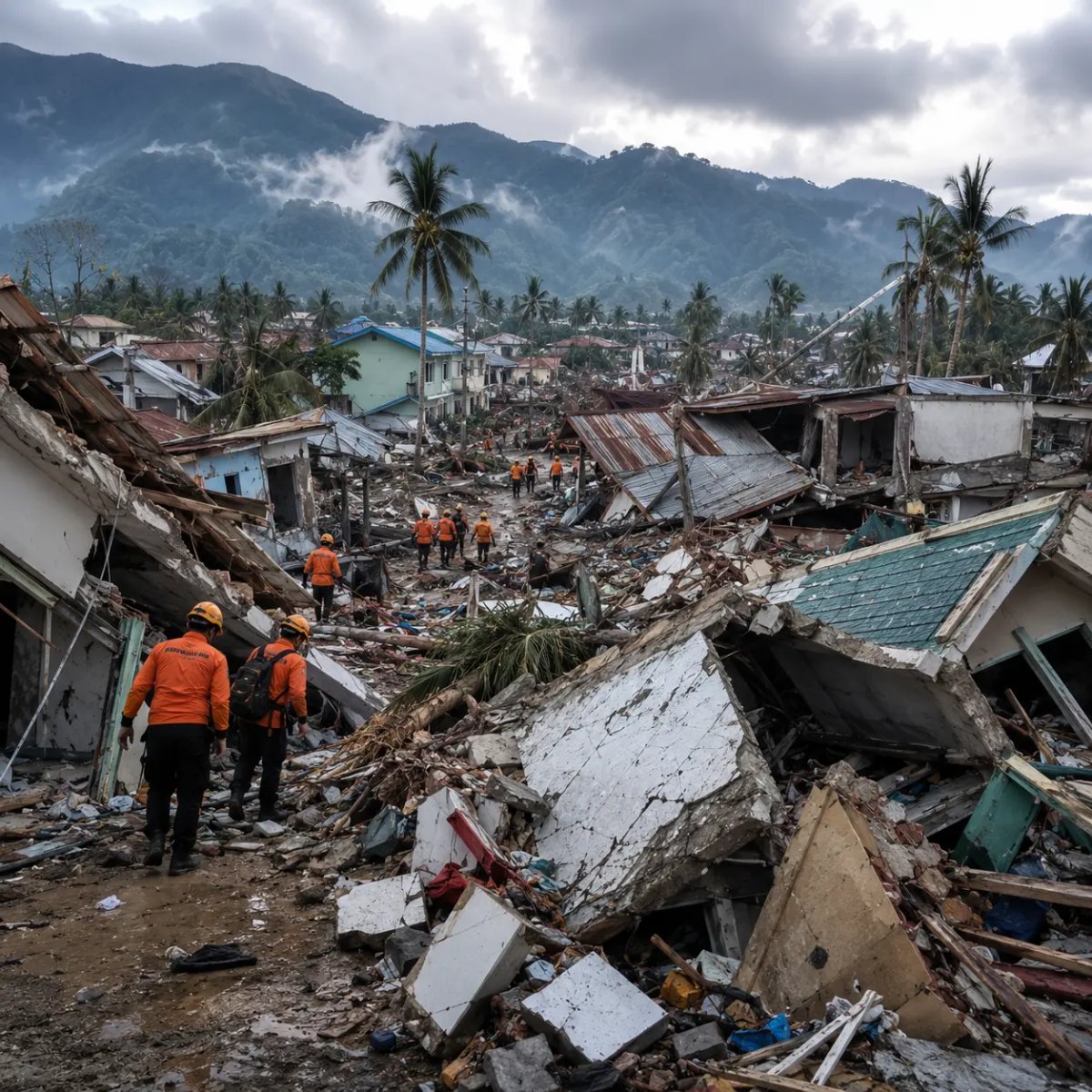
As Dawn Broke, Entire Communities Were Searching Through the Rubble
For many residents of eastern Indonesia, the morning after the earthquake began not with routine daily life but with desperate searches through collapsed homes, damaged buildings, and debris-strewn streets. Rescue workers, local volunteers, and emergency responders raced against time as survivors looked for missing family members following one of the region's most powerful earthquakes in recent years.
The magnitude 7.7 earthquake struck eastern Indonesia, killing at least 47 people and injuring hundreds more, according to preliminary official reports. The powerful tremor also triggered tsunami warnings across parts of the region, prompting evacuations before authorities later lifted the alerts after assessing the threat.
As emergency teams continue rescue operations, the disaster has drawn international attention and renewed concerns about the vulnerability of communities living along one of the world's most active seismic zones.
What Happened?
The earthquake struck eastern Indonesia with a preliminary magnitude of 7.7, sending strong shaking across multiple islands and coastal communities.
Residents reported being awakened by violent tremors that lasted long enough to cause panic and widespread evacuations. Buildings swayed, roads cracked, and power outages were reported in several affected areas.
Within minutes of the quake, authorities issued tsunami warnings for parts of the region due to the earthquake's strength and location beneath the sea floor. Coastal residents were urged to move to higher ground as emergency agencies monitored ocean conditions.
Hours later, after analyzing wave activity and seismic data, officials lifted the tsunami warnings, allowing evacuees to return cautiously to their communities.
While the tsunami threat diminished, the destruction caused by the earthquake itself continued to emerge as rescue teams gained access to affected areas.
Death Toll Expected to Rise
Authorities have confirmed at least 47 fatalities, but officials caution that the number could increase as search and rescue operations continue.
Many affected communities remain difficult to access due to damaged roads, landslides, and disrupted communication networks. Emergency responders are working to determine the full scale of the disaster while searching collapsed structures for survivors.
Experience from previous major earthquakes suggests that casualty figures often rise in the days following a powerful seismic event as rescue crews reach isolated locations and conduct detailed assessments.
Hospitals in the affected region have reported treating large numbers of injured residents suffering from fractures, head injuries, and trauma-related conditions.
Local officials have appealed for medical supplies, temporary shelters, food assistance, and clean drinking water as relief efforts expand.
Why Indonesia Is So Vulnerable to Earthquakes
Indonesia is one of the most earthquake-prone countries in the world.
The nation sits along the Pacific "Ring of Fire," a vast region where several tectonic plates meet and interact. This geological setting creates frequent seismic activity and makes Indonesia particularly susceptible to earthquakes, volcanic eruptions, and tsunamis.
The country experiences thousands of earthquakes every year, although most are too small to cause significant damage.
However, powerful earthquakes like the latest magnitude 7.7 event can have devastating consequences, particularly when they occur near populated areas or beneath the ocean floor.
Indonesia's location at the intersection of the Indo-Australian, Eurasian, Pacific, and Philippine Sea plates creates constant geological pressure beneath the region.
When that pressure is suddenly released, the result can be catastrophic.
Tsunami Fears Trigger Mass Evacuations
One of the most dramatic moments following the earthquake came when tsunami warnings were issued.
Residents living along coastal areas rushed inland, abandoning homes, businesses, and vehicles as emergency sirens sounded and local authorities urged immediate evacuations.
For many Indonesians, memories of previous tsunami disasters remain vivid.
The 2004 Indian Ocean tsunami, triggered by a massive earthquake off the coast of Sumatra, killed more than 230,000 people across multiple countries, including over 160,000 in Indonesia.
That tragedy fundamentally changed disaster preparedness efforts across the region and continues to shape emergency responses whenever large undersea earthquakes occur.
Although the latest tsunami threat ultimately did not materialize at a catastrophic scale, authorities say evacuation orders likely helped ensure public safety during a period of uncertainty.
Rescue Operations Underway
Search and rescue teams continue working around the clock in affected areas.
Emergency personnel have deployed heavy equipment to clear debris while specialized rescue units search for survivors trapped beneath collapsed structures.
Volunteers from local communities have joined official rescue efforts, assisting with evacuations, distributing aid, and helping identify areas where people may still be missing.
Rescue operations face several challenges, including:
- Damaged roads and bridges
- Communication disruptions
- Ongoing aftershocks
- Limited access to remote communities
- Power outages
- Shortages of emergency supplies
Authorities have warned residents to remain cautious as aftershocks continue to be recorded across the region.
Strong aftershocks can further weaken damaged buildings and complicate rescue efforts.
Infrastructure Damage Assessment Continues
While the human toll remains the immediate focus, officials are also beginning to assess the broader economic and infrastructure impact of the disaster.
Preliminary reports indicate damage to:
- Residential buildings
- Schools
- Hospitals
- Government facilities
- Transportation networks
- Power infrastructure
- Telecommunications systems
The full cost of reconstruction is not yet known.
Government engineers and disaster management teams are conducting structural inspections to determine which buildings can be safely occupied and which may require demolition.
In previous major earthquakes, reconstruction efforts have taken months or even years, depending on the scale of destruction.
The coming days will provide a clearer picture of the financial and logistical challenges facing affected communities.
International Humanitarian Response
The earthquake has prompted expressions of support from governments and international organizations around the world.
Humanitarian agencies are monitoring developments and preparing assistance if requested by Indonesian authorities.
Organizations specializing in disaster response have highlighted the importance of rapid aid delivery during the critical first 72 hours after a major earthquake.
This period is often considered the most important for locating survivors trapped beneath rubble and providing emergency medical care.
Several neighboring countries have indicated readiness to provide support, including emergency personnel, medical teams, and relief supplies if needed.
Indonesia has substantial disaster-response capabilities of its own, but large-scale emergencies often require coordinated international assistance.
The Science Behind a Magnitude 7.7 Earthquake
A magnitude 7.7 earthquake is considered a major seismic event capable of causing extensive damage across a wide geographic area.
The magnitude scale is logarithmic, meaning each increase in whole numbers represents a significant increase in released energy.
A magnitude 7.7 earthquake releases dramatically more energy than a magnitude 6.7 event.
Such earthquakes can:
- Collapse poorly constructed buildings
- Damage critical infrastructure
- Trigger landslides
- Generate tsunamis if they occur underwater
- Cause prolonged aftershock sequences
Seismologists continue to analyze the event to better understand the fault movement responsible for the earthquake.
The findings may help improve future hazard assessments and disaster preparedness planning.
Lessons From Previous Disasters
Indonesia has experienced several devastating earthquakes over the past two decades.
Major events in Aceh, Lombok, Sulawesi, and other regions have repeatedly demonstrated both the country's vulnerability and its growing capacity to respond to disasters.
Following previous tragedies, authorities invested heavily in:
- Tsunami warning systems
- Emergency communication networks
- Community preparedness programs
- Disaster response training
- Seismic monitoring infrastructure
Experts say these investments have improved resilience, although significant challenges remain due to Indonesia's vast geography and large population spread across thousands of islands.
The latest earthquake will likely prompt renewed discussions about building standards, disaster readiness, and long-term resilience planning.
What Happens Next?
The immediate priority remains saving lives and supporting affected communities.
Emergency responders will continue search operations while government agencies work to restore essential services and provide temporary shelter for displaced residents.
In the coming days, authorities are expected to release more detailed casualty figures and damage assessments.
Attention will then gradually shift toward recovery and reconstruction efforts.
For many families, however, the impact of the disaster will extend far beyond the immediate emergency response.
Rebuilding homes, businesses, schools, and communities may take years.
Beyond the Numbers
Natural disasters are often measured through statistics—magnitudes, casualty figures, and economic losses. Yet behind every number is a family searching for loved ones, a community trying to recover, and individuals confronting the uncertainty that follows a major catastrophe.
As rescue teams continue their work across eastern Indonesia, the focus remains on those still waiting for news, those beginning the difficult process of rebuilding, and those whose lives changed in a matter of seconds when the earth beneath them suddenly moved.
The earthquake serves as another reminder of nature's immense power and the importance of preparedness in a region where geological forces remain a constant part of life.
What's Your Reaction?
 Like
0
Like
0
 Dislike
0
Dislike
0
 Love
0
Love
0
 Funny
0
Funny
0
 Wow
0
Wow
0
 Sad
0
Sad
0
 Angry
0
Angry
0

The Excuse Alliance is an independent digital news platform covering India’s latest developments in politics, business, technology, society, economy, and public affairs. Our mission is to provide accurate, fact-based, and trustworthy journalism that keeps readers informed about the issues shaping India.








Comments (0)