

Why Water Security Could Become India’s Biggest National Challenge
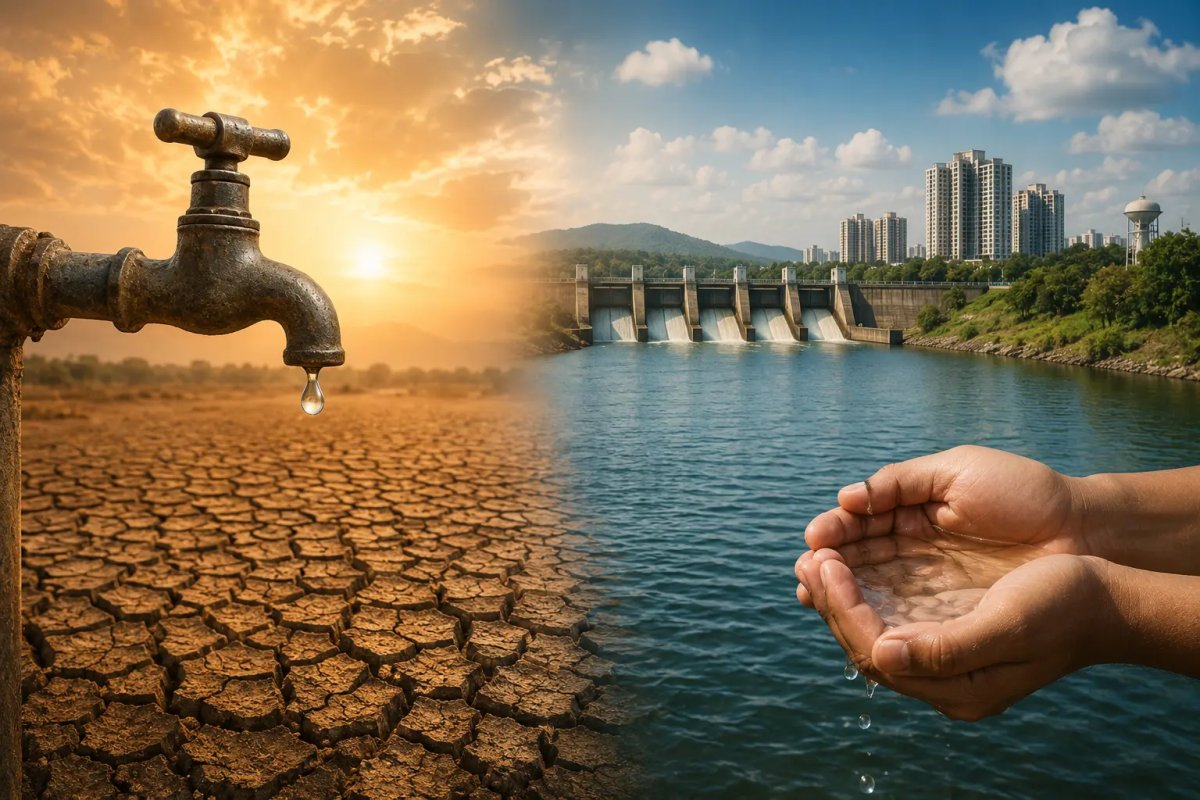
Water has always been one of India's most valuable resources. It supports agriculture, powers industries, sustains ecosystems, and provides drinking water to more than 1.4 billion people. Yet experts increasingly warn that water security may emerge as one of the country's most significant national challenges in the coming decades.
Recent floods, droughts, groundwater concerns, and growing disputes over water-sharing have once again placed the issue at the center of public policy discussions. While India receives substantial rainfall during the monsoon season, managing and distributing water effectively remains a complex challenge.
As climate change alters weather patterns and demand for water continues to rise, policymakers, scientists, and environmental experts are urging long-term action to prevent future crises.
Understanding Water Security
Water security refers to the reliable availability of sufficient quantities of clean water for households, agriculture, industries, and ecosystems.
It is not simply about how much water a country receives through rainfall.
Instead, water security depends on several interconnected factors:
- Availability of freshwater resources
- Groundwater reserves
- Infrastructure and storage capacity
- Water quality
- Climate conditions
- Population growth
- Governance and policy effectiveness
For India, balancing these factors has become increasingly challenging.
The country supports nearly 18% of the world's population but possesses only about 4% of global freshwater resources. This imbalance places enormous pressure on rivers, reservoirs, lakes, and underground aquifers.
Climate Change Is Reshaping Water Availability
One of the biggest threats to India's water future is climate change.
Meteorologists and climate researchers have observed increasing variability in rainfall patterns across many parts of the country. Instead of receiving consistent rainfall throughout the monsoon season, some regions now experience prolonged dry periods followed by intense downpours.
These shifts create multiple challenges.
Heavy rainfall can lead to flooding, while extended dry periods reduce water availability for agriculture and drinking purposes.
Scientists also warn that rising temperatures increase evaporation rates, reducing the amount of water available in reservoirs, lakes, and soil.
The India Meteorological Department and climate researchers have repeatedly highlighted the growing frequency of extreme weather events, including both severe floods and drought-like conditions.
This changing climate pattern complicates traditional water management strategies that were designed around more predictable weather systems.
The Growing Groundwater Crisis
Perhaps the most serious long-term concern is groundwater depletion.
Groundwater serves as a critical source of water for millions of Indians. It supports irrigation, urban water supplies, and household consumption in both rural and urban areas.
For decades, groundwater extraction has helped farmers increase agricultural production and improve food security. However, experts warn that extraction rates in many regions exceed natural recharge levels.
As a result, water tables have been declining in several states.
The Central Ground Water Board and various research institutions have repeatedly noted concerns regarding over-extraction in parts of Punjab, Haryana, Rajasthan, Gujarat, Karnataka, and other regions.
When groundwater levels fall significantly, wells must be dug deeper, pumping costs increase, and communities become more vulnerable during droughts.
In some areas, declining groundwater levels have also contributed to water quality concerns, including increased salinity and contamination risks.
Agriculture Remains at the Center of the Debate
Agriculture accounts for the largest share of India's water consumption.
Irrigation supports food production, rural livelihoods, and national food security.
However, water-intensive farming practices have created sustainability concerns in several regions.
Crops such as rice and sugarcane require substantial amounts of water. In areas where groundwater resources are already under pressure, continued cultivation of highly water-intensive crops can accelerate depletion.
Agricultural experts increasingly advocate for:
- Micro-irrigation systems
- Drip irrigation
- Efficient water management practices
- Crop diversification
- Improved water-use efficiency
These measures can help reduce pressure on water resources while maintaining agricultural productivity.
The challenge lies in balancing farmer incomes, food security objectives, and environmental sustainability.
Rapid Urbanization Is Increasing Demand
India's cities are expanding rapidly.
Urban populations continue to grow as economic opportunities attract people from rural areas.
This growth increases demand for:
- Drinking water
- Sanitation services
- Industrial water supplies
- Urban infrastructure
Major cities such as Delhi, Bengaluru, Chennai, Hyderabad, and Mumbai have periodically faced concerns regarding water availability and distribution.
Urban planners note that aging infrastructure, water losses through leakages, and inadequate storage capacity often worsen existing challenges.
Many cities also rely heavily on distant reservoirs, rivers, or groundwater sources, making them vulnerable to supply disruptions during periods of drought or extreme weather.
As urban populations continue to rise, improving water infrastructure will remain a critical policy priority.
Water Disputes Are Becoming More Frequent
Water security is not only an environmental issue—it is also a governance challenge.
India has witnessed multiple interstate water disputes involving river-sharing arrangements.
The Cauvery dispute between Karnataka and Tamil Nadu remains one of the most prominent examples. Similar concerns have emerged around other river basins as states seek to secure sufficient water for agriculture, households, and industry.
These disputes often intensify during years of below-average rainfall.
Experts believe that growing water stress could increase pressure on policymakers to develop more transparent and adaptive water-sharing frameworks.
Effective cooperation between states will likely become increasingly important as climate variability affects river flows and reservoir levels.
Economic Consequences of Water Insecurity
Water shortages can have significant economic impacts.
Agriculture, manufacturing, energy production, construction, and service industries all depend on reliable water supplies.
When water becomes scarce, economic activity can be disrupted.
Potential consequences include:
- Reduced agricultural output
- Higher food prices
- Increased production costs
- Industrial slowdowns
- Infrastructure strain
Investors and businesses increasingly consider water availability when evaluating long-term investment opportunities.
Ensuring water security therefore has implications not only for environmental sustainability but also for economic growth and competitiveness.
What Is the Government Doing?
Indian governments at both national and state levels have launched several initiatives aimed at improving water management.
These efforts include:
- Jal Jeevan Mission
- Atal Bhujal Yojana
- River conservation projects
- Rainwater harvesting initiatives
- Groundwater monitoring programs
- Watershed development schemes
Many states have also introduced regulations governing groundwater extraction and water conservation.
Experts generally agree that these initiatives represent important steps forward.
However, they emphasize that long-term success will require consistent implementation, stronger enforcement mechanisms, and greater public participation.
Technology Could Play a Key Role
Technology is increasingly becoming an important tool in water management.
Advanced systems now allow authorities to:
- Monitor groundwater levels
- Track reservoir capacity
- Predict rainfall patterns
- Detect leaks in water distribution networks
- Improve irrigation efficiency
Satellite monitoring, artificial intelligence, remote sensing, and data analytics are helping decision-makers better understand water availability and consumption patterns.
Researchers believe these technologies can support more informed policy decisions and improve resource allocation.
However, technology alone cannot solve water challenges without effective governance and public cooperation.
The Path Forward
Experts argue that India's water future will depend on a combination of policy reforms, infrastructure investment, scientific innovation, and behavioral change.
Potential priorities include:
- Improving groundwater management
- Expanding rainwater harvesting
- Modernizing irrigation systems
- Protecting watersheds and wetlands
- Enhancing water recycling
- Strengthening interstate cooperation
- Building climate-resilient infrastructure
Public awareness will also play a crucial role.
Water conservation efforts are most effective when governments, businesses, farmers, and citizens work together toward shared goals.
Conclusion
Water security is emerging as one of the defining policy challenges of the twenty-first century.
India's growing population, expanding economy, climate pressures, and increasing water demand are creating complex risks that require long-term solutions.
While the country has made significant progress in improving access to water and strengthening management systems, major challenges remain.
Groundwater depletion, climate variability, urban growth, and rising competition for water resources are likely to shape policy debates for years to come.
The question is no longer whether water security will become a national priority.
For many experts, it already has.
The challenge now is ensuring that India's water resources remain sustainable, resilient, and accessible for future generations while supporting the country's continued economic and social development.
What's Your Reaction?
 Like
0
Like
0
 Dislike
0
Dislike
0
 Love
0
Love
0
 Funny
0
Funny
0
 Wow
0
Wow
0
 Sad
0
Sad
0
 Angry
0
Angry
0

The Excuse Alliance is an independent digital news platform covering India’s latest developments in politics, business, technology, society, economy, and public affairs. Our mission is to provide accurate, fact-based, and trustworthy journalism that keeps readers informed about the issues shaping India.






Comments (0)