How Political Communication Is Changing in the Age of Memes
Discover how memes, Gen Z voters, and digital campaigning are transforming political communication, shaping narratives, and influencing modern elections.
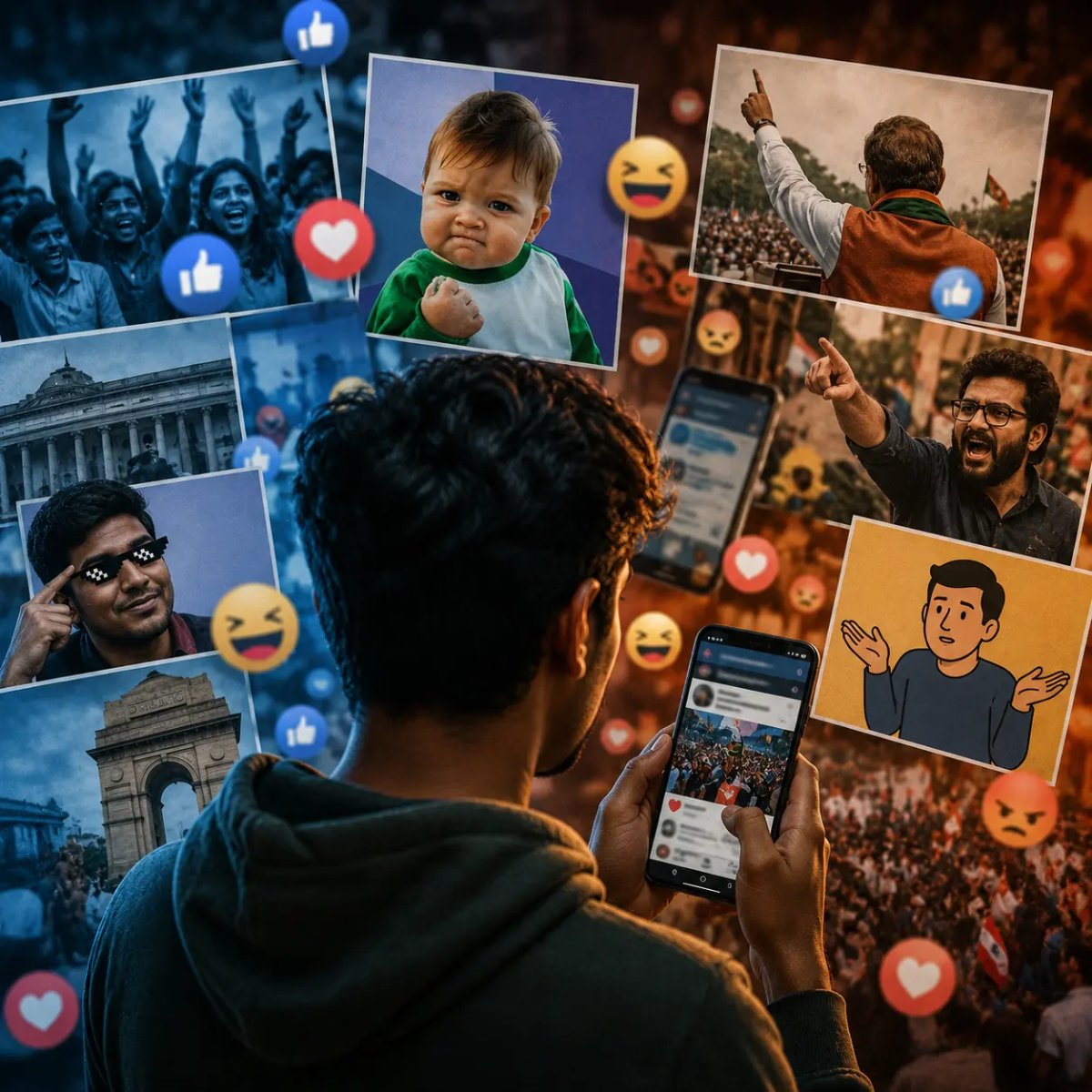
Political communication has undergone a dramatic transformation in the digital era. Speeches, television interviews, newspaper editorials, and campaign rallies once dominated the way political messages reached voters. Today, however, a growing share of political discourse unfolds through memes, short-form videos, social media posts, and online communities.
As Gen Z emerges as a significant voting bloc in India and around the world, political parties, candidates, and advocacy groups are adapting their communication strategies to connect with audiences that consume information very differently from previous generations. Memes, once viewed as internet humor with little political significance, have become powerful tools for shaping narratives, influencing public opinion, and driving engagement.
The shift raises important questions about how democracy functions in an age where complex political issues are often condensed into images, jokes, and viral content.
The Rise of Meme-Based Political Communication
Memes are digital pieces of content—usually images, videos, or text-based graphics—that are rapidly shared across social media platforms.
Initially associated with internet culture and entertainment, memes have increasingly become vehicles for political messaging. Political leaders, parties, supporters, activists, and even government agencies now use memes to communicate ideas, criticize opponents, highlight achievements, or respond to current events.
The appeal of memes lies in their simplicity. A message that might take hundreds of words to explain in an article can often be summarized through a single image and caption that spreads quickly across platforms such as Instagram, X, YouTube Shorts, Facebook, and WhatsApp.
For political communicators, this provides an opportunity to reach audiences that may not regularly consume traditional political content.
Why Gen Z Is Changing the Political Landscape
Gen Z, generally defined as individuals born between the late 1990s and early 2010s, represents one of the most digitally connected generations in history.
Unlike older voters who grew up with newspapers and television news, many Gen Z citizens receive information through smartphones and social media feeds. Their media consumption habits emphasize:
- Short-form content
- Visual storytelling
- Interactive discussions
- Creator-driven content
- Community engagement
Political campaigns increasingly recognize that reaching younger voters requires adapting to these preferences.
Digital strategists note that younger audiences are often more likely to engage with political content presented through relatable humor, cultural references, and shareable formats rather than lengthy policy explanations.
As a result, memes have become a central component of modern political outreach.
Political Parties Are Adapting
Across democratic systems, political organizations have expanded their digital communication efforts.
Campaign teams now employ social media managers, digital strategists, graphic designers, video editors, and content creators who specialize in producing content optimized for online engagement.
Instead of relying exclusively on formal speeches and press conferences, political messaging often includes:
- Meme campaigns
- Reaction videos
- Short clips from speeches
- Trending audio formats
- Influencer collaborations
- Platform-specific content strategies
Political figures themselves have also become more active on social media, seeking to present a more direct and relatable image to voters.
This approach allows campaigns to bypass traditional media channels and communicate directly with audiences.
Memes as Political Narratives
One reason memes have become influential is their ability to simplify complex political narratives.
A well-crafted meme can communicate:
- Support for a policy
- Criticism of an opponent
- A campaign slogan
- Public frustration
- National sentiment
- Generational concerns
Because memes are often humorous or emotionally engaging, they can spread much faster than traditional political messages.
Communication researchers note that people are generally more likely to share content that evokes emotion, whether humor, outrage, pride, or surprise.
This sharing behavior amplifies political narratives and increases their visibility across social networks.
The Benefits of Digital Political Engagement
Supporters of digital campaigning argue that meme culture can make politics more accessible.
Many younger citizens who may not watch parliamentary debates or lengthy political interviews still encounter political content through their social feeds.
Potential benefits include:
Increased Political Awareness
Memes can introduce political topics to audiences who might otherwise avoid political discussions.
Higher Engagement
Interactive content encourages participation through comments, shares, and discussions.
Direct Communication
Candidates can communicate directly with voters without relying solely on traditional media coverage.
Broader Reach
Digital content can reach millions of users within hours, especially when it becomes viral.
For political organizations seeking to connect with younger demographics, these advantages are difficult to ignore.
The Challenges and Risks
While memes can boost engagement, experts warn that they also present significant challenges.
Oversimplification
Political issues often involve legal, economic, social, and constitutional complexities.
Memes typically reduce these topics to highly simplified messages, which may leave out important context.
Critics argue that voters need access to detailed information to make informed decisions.
Misinformation
One of the biggest concerns is the rapid spread of inaccurate or misleading content.
Because memes are easy to create and share, false claims can spread quickly before fact-checkers or official sources respond.
Political misinformation has become a growing concern worldwide, particularly during election periods.
Polarization
Memes frequently rely on strong emotional reactions.
While this can increase engagement, it may also deepen political divisions by encouraging "us versus them" thinking.
Researchers studying online behavior have found that highly emotional political content often generates stronger reactions but can contribute to increased polarization.
Echo Chambers
Social media algorithms frequently show users content similar to what they already engage with.
This can create echo chambers where individuals primarily encounter viewpoints that reinforce their existing beliefs.
As a result, political discussions may become less balanced and more fragmented.
The Role of Influencers and Content Creators
Another major shift in political communication is the growing role of influencers and independent content creators.
Many younger voters follow creators who discuss current affairs, public policy, and political developments in ways that feel more accessible than traditional news coverage.
Political campaigns increasingly recognize that influencer audiences can rival or exceed those of some traditional media outlets.
However, this trend also raises questions about transparency, disclosure, and accountability when political messages are delivered through non-traditional channels.
Regulators in several countries continue to examine how digital political advertising and influencer partnerships should be governed.
India's Digital Political Evolution
India's large internet user base has made digital communication a major component of modern politics.
With hundreds of millions of smartphone users and widespread social media adoption, online platforms play a growing role in shaping public discourse.
Political parties across the spectrum actively use:
- WhatsApp groups
- Instagram content
- YouTube channels
- Short-form video platforms
- Social media campaigns
As younger voters become an increasingly influential segment of the electorate, digital-first communication strategies are expected to expand further.
Election campaigns are likely to become even more data-driven, personalized, and platform-specific in the coming years.
What This Means for Democracy
The rise of memes in political communication reflects broader changes in how citizens consume information.
Traditional journalism, policy debates, and political speeches continue to play important roles, but they now compete with a digital ecosystem built around speed, shareability, and engagement.
Supporters view this evolution as a democratization of political communication that allows more voices to participate in public conversations.
Critics caution that the same tools that increase participation can also facilitate misinformation, manipulation, and polarization.
The challenge for democratic societies will be finding ways to encourage digital engagement while maintaining informed public debate.
Looking Ahead
Political communication is unlikely to return to the era when newspapers and television dominated the conversation.
Instead, campaigns, governments, media organizations, and voters are adapting to an environment where memes, short-form videos, and social media interactions shape political narratives in real time.
For Gen Z voters, digital communication is not an alternative to politics—it is increasingly the primary way politics is experienced.
As future elections approach, the influence of meme culture and online storytelling is expected to grow further. Whether this leads to more informed civic participation or greater challenges for public discourse will depend on how political actors, platforms, and citizens navigate the opportunities and risks of the digital age.
What's Your Reaction?
 Like
0
Like
0
 Dislike
0
Dislike
0
 Love
0
Love
0
 Funny
0
Funny
0
 Wow
0
Wow
0
 Sad
0
Sad
0
 Angry
0
Angry
0

The Excuse Alliance is an independent digital news platform covering India’s latest developments in politics, business, technology, society, economy, and public affairs. Our mission is to provide accurate, fact-based, and trustworthy journalism that keeps readers informed about the issues shaping India.








Comments (0)