

Women's Reservation Bill: Why PM Modi Wants Immediate Implementation of 33% Quota for Women
Prime Minister Narendra Modi has urged political parties to support the immediate implementation of the Women's Reservation Bill. Here's what the 33% quota means, why it matters, and its impact on India's political future.

A Renewed Push for a Historic Reform
Prime Minister Narendra Modi has once again placed women's political representation at the center of India's national conversation. During his address marking India's 80th Independence Day, Modi urged all political parties to support the swift implementation of the Women's Reservation Bill, emphasizing that women must play a larger role in shaping the country's future. The proposal seeks to reserve 33% of seats in the Lok Sabha and state legislative assemblies for women, a reform that has been debated for decades.
The Prime Minister's renewed appeal comes at a politically significant moment. With discussions around electoral reforms, delimitation, and representation gaining momentum, the issue of women's reservation has once again emerged as a major national policy debate. Supporters view the proposal as a long-overdue step toward gender equality in politics, while critics continue to raise concerns about implementation mechanisms and electoral implications.
The debate is not merely about numbers. It is about who gets a seat at the decision-making table in the world's largest democracy.
What Is the Women's Reservation Bill?
The Women's Reservation Bill, officially known through the constitutional framework established by the Nari Shakti Vandan Adhiniyam, aims to reserve one-third of all seats in the Lok Sabha and state legislative assemblies for women. The legislation was passed by Parliament in 2023 with overwhelming support, marking a significant milestone after decades of political debate.
The measure was widely celebrated as a landmark reform intended to increase female participation in legislative institutions. However, while the law was enacted, its implementation was linked to future census and delimitation exercises. This meant that the reservation would not automatically come into force immediately after passage.
As a result, many women leaders and civil society groups welcomed the legislation but questioned when Indian women would actually begin benefiting from the new quota system.
Why Is Modi Calling for Immediate Implementation?
The Prime Minister's latest appeal reflects the government's effort to accelerate the process and ensure that the reservation becomes operational as early as possible. During his Independence Day speech, Modi urged political parties to rise above partisan differences and support the implementation of the 33% quota. He argued that women's participation is essential for India's development and governance.
The government has repeatedly highlighted women's empowerment as a central pillar of its governance agenda. Alongside political representation, Modi has promoted initiatives focused on financial inclusion, entrepreneurship, self-help groups, and rural women's economic participation. During the same Independence Day address, he reiterated the goal of creating six crore "Lakhpati Didis," women earning at least ₹1 lakh annually through economic activities.
For the government, political representation is increasingly being framed as the next step in a broader empowerment strategy.
The Delimitation Challenge
One of the biggest obstacles to implementing the women's quota has been its connection to delimitation.
Delimitation refers to the process of redrawing parliamentary and assembly constituencies to reflect population changes. India's current constituency boundaries are based on earlier census data, and future delimitation exercises are expected to significantly alter political representation across states.
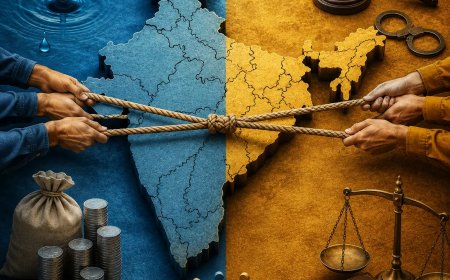
Because the 2023 legislation linked women's reservation to a future census and subsequent delimitation exercise, implementation has effectively remained on hold. Critics argue that tying the quota to these larger structural changes creates uncertainty and delays. Supporters of immediate implementation contend that women's representation should not have to wait for broader electoral reforms.
This disagreement has become one of the central fault lines in the debate.
The Failed 2026 Amendment Attempt
Earlier in 2026, the government attempted to address these concerns through a constitutional amendment designed to operationalize the women's quota ahead of the next general election cycle. The proposal sought to advance implementation while simultaneously introducing broader changes related to parliamentary expansion and delimitation.
However, the bill failed to secure the required two-thirds majority in the Lok Sabha. While many opposition parties supported the idea of women's reservation in principle, they opposed linking the measure to delimitation and parliamentary seat expansion. Critics argued that combining these issues risked turning a widely supported reform into a contentious political battle.
The defeat represented a rare legislative setback for the government and demonstrated the complexity of achieving consensus on constitutional reforms.
Why Women's Representation Matters
India has made significant progress in women's participation across education, business, sports, and public life. Yet women remain underrepresented in legislative institutions.
Women currently account for only a small share of lawmakers in Parliament and state assemblies compared with their proportion of the population. Various studies and international experiences suggest that increasing women's representation can influence policy priorities, governance outcomes, and legislative debates.
Supporters of the quota argue that greater female representation could lead to increased focus on issues such as healthcare, education, nutrition, workplace participation, safety, and social welfare. They also contend that visible political leadership can encourage broader participation by women in public life.
The success of reservations for women in Panchayati Raj institutions is often cited as evidence that political quotas can increase participation and create pathways for future leaders. Several states have already expanded local government reservations for women to 50%, leading to the emergence of thousands of female elected representatives.
Political Implications Ahead of Future Elections
The Women's Reservation Bill carries enormous electoral significance.
If implemented before future elections, political parties would need to rethink candidate selection, organizational structures, and leadership development strategies. Hundreds of constituencies could eventually become reserved for female candidates, forcing parties to cultivate a larger pool of women leaders at local, state, and national levels.
This could reshape India's political landscape in several ways.
First, it would likely increase competition among parties to identify credible women candidates. Second, it could create opportunities for younger leaders and first-time entrants into politics. Third, it could alter electoral strategies in key states where political margins are often narrow.
For parties seeking to expand their voter base among women, support for the bill also carries symbolic and political value.
Women's participation as voters has risen dramatically over the past two decades, and in several elections female voter turnout has matched or exceeded that of men. As a result, political parties increasingly recognize women as a decisive electoral constituency.
The Opposition's Position
Opposition parties generally support increasing women's representation but differ with the government on implementation methods.
Many opposition leaders argue that the reservation should be introduced independently rather than being tied to delimitation exercises. Some have also demanded additional provisions to ensure representation for women from marginalized communities and backward classes within the broader quota framework.
Southern states have also expressed concerns about how future delimitation exercises might affect their political influence. Since population growth rates vary significantly across regions, changes in constituency allocation could alter the balance of representation between states. These concerns have contributed to resistance against proposals that combine women's reservation with broader electoral restructuring.
The result is a situation where there is substantial agreement on the goal but disagreement on the path to achieving it.
Beyond Symbolism: The Governance Question
The debate around women's reservation is often framed as an issue of fairness and representation. However, it also raises broader questions about governance.
Proponents argue that more inclusive legislatures are likely to produce policies that better reflect the needs of diverse populations. They point to evidence from local governance institutions where women representatives have often prioritized community services, education, healthcare, and welfare initiatives.
Critics, meanwhile, caution that reservation alone is not sufficient. They argue that political parties must also invest in leadership training, campaign support, and institutional reforms to ensure meaningful participation rather than symbolic representation.
Ultimately, the effectiveness of any quota system will depend not only on the number of women elected but also on their ability to influence policy and decision-making.
What Happens Next?
Prime Minister Modi's latest call for support signals that the government intends to keep the issue high on the national agenda. Whether a new legislative pathway emerges remains uncertain, but the renewed emphasis suggests that women's political representation will remain a major policy and electoral issue in the months ahead.
The coming parliamentary sessions are likely to witness fresh debates over implementation, delimitation, and constitutional reform. Political parties across the spectrum will face increasing pressure to clarify their positions and demonstrate their commitment to women's representation.
Conclusion
The Women's Reservation Bill represents one of the most significant proposed changes to India's political system in recent decades. By seeking to reserve one-third of legislative seats for women, it aims to address a long-standing imbalance in political representation and create a more inclusive democracy.
Prime Minister Narendra Modi's renewed push reflects both the political importance and the unfinished nature of the reform. While broad support exists for greater participation by women in politics, disagreements over implementation continue to shape the debate.
As India moves toward future elections and broader discussions on electoral reform, the question is no longer whether women should have a larger role in governance. The central issue is how quickly—and through what mechanism—that promise can become reality.
What's Your Reaction?
 Like
0
Like
0
 Dislike
0
Dislike
0
 Love
0
Love
0
 Funny
0
Funny
0
 Wow
0
Wow
0
 Sad
0
Sad
0
 Angry
0
Angry
0

The Excuse Alliance is an independent digital news platform covering India’s latest developments in politics, business, technology, society, economy, and public affairs. Our mission is to provide accurate, fact-based, and trustworthy journalism that keeps readers informed about the issues shaping India.








Comments (0)