Trump-Linked Crypto Company Wins Banking Approval, Fueling Debate Over Regulation and Political Influence
A Trump-linked cryptocurrency company, World Liberty Financial, has received banking charter approval from U.S. regulators. The decision could reshape crypto regulation, stablecoin adoption, and political debates surrounding digital finance.
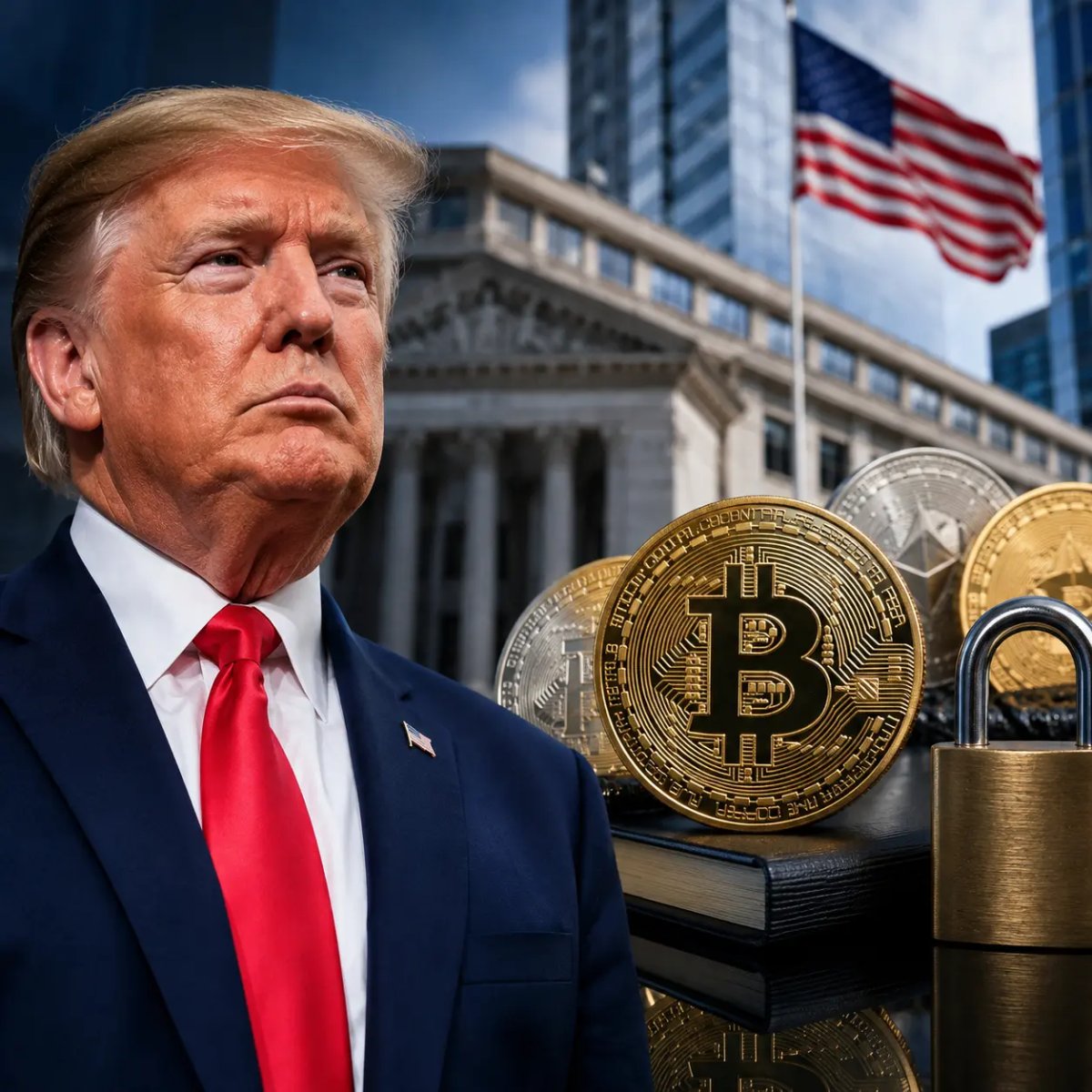
WASHINGTON, D.C. — In a decision that could reshape the future of digital finance in the United States, federal regulators have granted conditional approval for a national trust bank charter to World Liberty Financial, a cryptocurrency venture closely associated with President Donald Trump and members of his family. The move marks one of the most significant regulatory milestones for a politically connected crypto company and immediately reignited debate over cryptocurrency oversight, financial innovation, and conflicts of interest in government.
The approval was issued by the Office of the Comptroller of the Currency (OCC), which oversees national banks and federal savings associations. Under the preliminary authorization, World Liberty Financial's banking arm, World Liberty Trust, can move toward operating as a federally chartered trust bank once it satisfies regulatory conditions outlined by the agency.
While the charter does not allow the company to function as a traditional commercial bank that accepts deposits or issues loans, it significantly expands its ability to provide digital asset custody, process payments, manage reserves, and issue stablecoins under a federal regulatory framework.
The approval arrives at a pivotal moment for the cryptocurrency industry, which has spent years seeking greater regulatory clarity and broader integration with the traditional financial system.
A Major Win for Crypto Adoption
For years, cryptocurrency companies have argued that outdated regulations have prevented the industry from reaching its full potential. Obtaining a federal banking charter has long been viewed as a critical step toward legitimacy because it places crypto businesses within the same regulatory ecosystem as many established financial institutions.
World Liberty Financial's approval is therefore being viewed by supporters as more than a company-specific victory. Many see it as a signal that digital asset firms may increasingly gain access to federally supervised financial infrastructure.
The trust bank structure allows the company to provide institutional-grade custody services, safeguard digital assets, and oversee stablecoin operations without relying extensively on third-party providers. Industry advocates argue that such arrangements could improve transparency and reduce operational risks compared with less-regulated alternatives.
The company is expected to play a growing role in managing USD1, a U.S. dollar-backed stablecoin launched by World Liberty Financial. Stablecoins are digital tokens designed to maintain a fixed value relative to traditional currencies, making them one of the fastest-growing sectors within cryptocurrency markets.
What Is World Liberty Financial?
World Liberty Financial emerged in 2024 as a decentralized finance (DeFi) venture connected to Donald Trump, his sons, and business associates including entrepreneur Zach Witkoff. The project entered the market amid growing political interest in cryptocurrency and quickly became one of the most closely watched crypto ventures in the United States.
The company initially focused on blockchain-based financial services before expanding into stablecoins and broader digital asset infrastructure.
Its USD1 stablecoin has grown rapidly since launch, reportedly becoming one of the largest dollar-backed stablecoins in circulation. Market growth has attracted significant institutional attention and elevated the firm's profile within the digital asset sector.
Executives have argued that obtaining a banking charter would enable the company to reduce dependence on external partners and build a more integrated financial ecosystem capable of competing with larger crypto and fintech firms.
Why Critics Are Raising Concerns
The approval has also generated immediate political controversy.
Because World Liberty Financial is linked to the Trump family, critics argue that the decision raises questions about whether political influence could affect financial regulation. Several lawmakers and ethics advocates have pointed to the unusual nature of a sitting president's family maintaining substantial ties to a rapidly expanding cryptocurrency enterprise while federal agencies oversee key aspects of the industry.
Opponents have questioned whether the regulatory process can remain fully independent when companies connected to political leaders receive approvals that competitors may struggle to obtain.
Some critics have also highlighted reports that other fintech and digital finance firms faced difficulties securing similar charters despite extensive applications. Those comparisons have intensified scrutiny of the OCC's decision-making process.
Supporters of the approval reject allegations of favoritism, arguing that the company underwent the same regulatory review process required of other applicants and that conditional approval does not guarantee unrestricted operations. Regulatory conditions remain in place before final authorization can occur.
The Stablecoin Factor
One reason the decision has drawn so much attention is the growing importance of stablecoins within the global financial system.
Unlike highly volatile cryptocurrencies such as Bitcoin, stablecoins are designed to maintain a consistent value, usually through reserves of dollars, Treasury securities, or other liquid assets. As a result, they are increasingly being used for payments, settlements, remittances, and institutional transactions.
Many analysts believe stablecoins could become a major bridge between traditional finance and blockchain-based systems during the coming decade.
The trust bank approval strengthens World Liberty Financial's ability to manage reserves and issue USD1 directly under a federal framework. Supporters argue that this could improve confidence among institutional users seeking regulatory oversight.
Critics, however, warn that the rapid growth of stablecoins creates new regulatory challenges, including reserve transparency, systemic risk, consumer protection, and anti-money laundering compliance. These issues remain central to ongoing debates in Washington.
A Test Case for Crypto Regulation
The approval arrives as lawmakers continue negotiating broader cryptocurrency legislation.
Washington has spent years attempting to establish clearer rules for digital assets, with policymakers divided over how aggressively cryptocurrencies should be regulated. Some legislators favor innovation-friendly frameworks designed to keep blockchain companies in the United States, while others prioritize stronger investor protections and stricter oversight.
The World Liberty decision now becomes an important real-world test of how federal regulators intend to balance those competing priorities.
If the trust bank successfully launches and operates under federal supervision, proponents may point to it as evidence that crypto firms can integrate safely into the financial system.
If controversies emerge, however, critics could use the case to argue for stricter restrictions on politically connected crypto ventures and stronger separation between government officials and private digital asset businesses.
Growing Intersection of Politics and Digital Assets
The broader significance of the approval extends beyond banking.
Cryptocurrency has become increasingly intertwined with American politics. Digital assets now influence campaign fundraising, policy debates, regulatory appointments, and voter outreach efforts. Political leaders from both major parties have expressed varying degrees of support for blockchain innovation, though approaches differ significantly.
Trump himself has shifted from earlier skepticism toward cryptocurrency to becoming one of its most prominent political supporters. That evolution has helped place crypto policy closer to the center of national political discussion.
Analysts note that the rise of politically connected crypto ventures reflects a larger trend in which digital assets are no longer viewed solely as technological experiments but increasingly as strategic economic and political tools.
What Happens Next?
Conditional approval is not the end of the process.
World Liberty Trust must still satisfy regulatory requirements before receiving final authorization to operate as a national trust bank. These conditions reportedly include capital requirements, governance standards, auditing procedures, and ongoing compliance obligations.
Regulators will continue monitoring the firm's progress as it moves toward full implementation.
At the same time, lawmakers, watchdog organizations, and industry participants are expected to scrutinize every stage of the rollout. Given the political profile of those associated with the company, the trust bank will likely face a level of public attention rarely experienced by newly chartered financial institutions.
The Bigger Picture
The approval of World Liberty Financial's banking charter may ultimately be remembered as more than a regulatory decision.
For supporters, it represents another step toward bringing cryptocurrency into mainstream finance under federal supervision. For critics, it highlights unresolved questions about political influence, ethics, and the boundaries between public office and private financial interests.
Either way, the decision places World Liberty Financial at the center of two of the most powerful forces shaping modern America: cryptocurrency and politics.
As regulators, lawmakers, investors, and voters assess the implications, the approval is likely to remain a flashpoint in the national conversation about who should control the future of money—and how closely that future should intersect with political power.
What's Your Reaction?
 Like
0
Like
0
 Dislike
0
Dislike
0
 Love
0
Love
0
 Funny
0
Funny
0
 Wow
0
Wow
0
 Sad
0
Sad
0
 Angry
0
Angry
0

The Excuse Alliance is an independent digital news platform covering India’s latest developments in politics, business, technology, society, economy, and public affairs. Our mission is to provide accurate, fact-based, and trustworthy journalism that keeps readers informed about the issues shaping India.









Comments (0)