

China's Arctic Trade Route Could Change Global Shipping and Geopolitics
China is expanding its Arctic Ice Silk Road initiative to create shorter trade routes between Asia and Europe. The strategy could reshape global shipping, geopolitics, and economic competition in the Arctic.
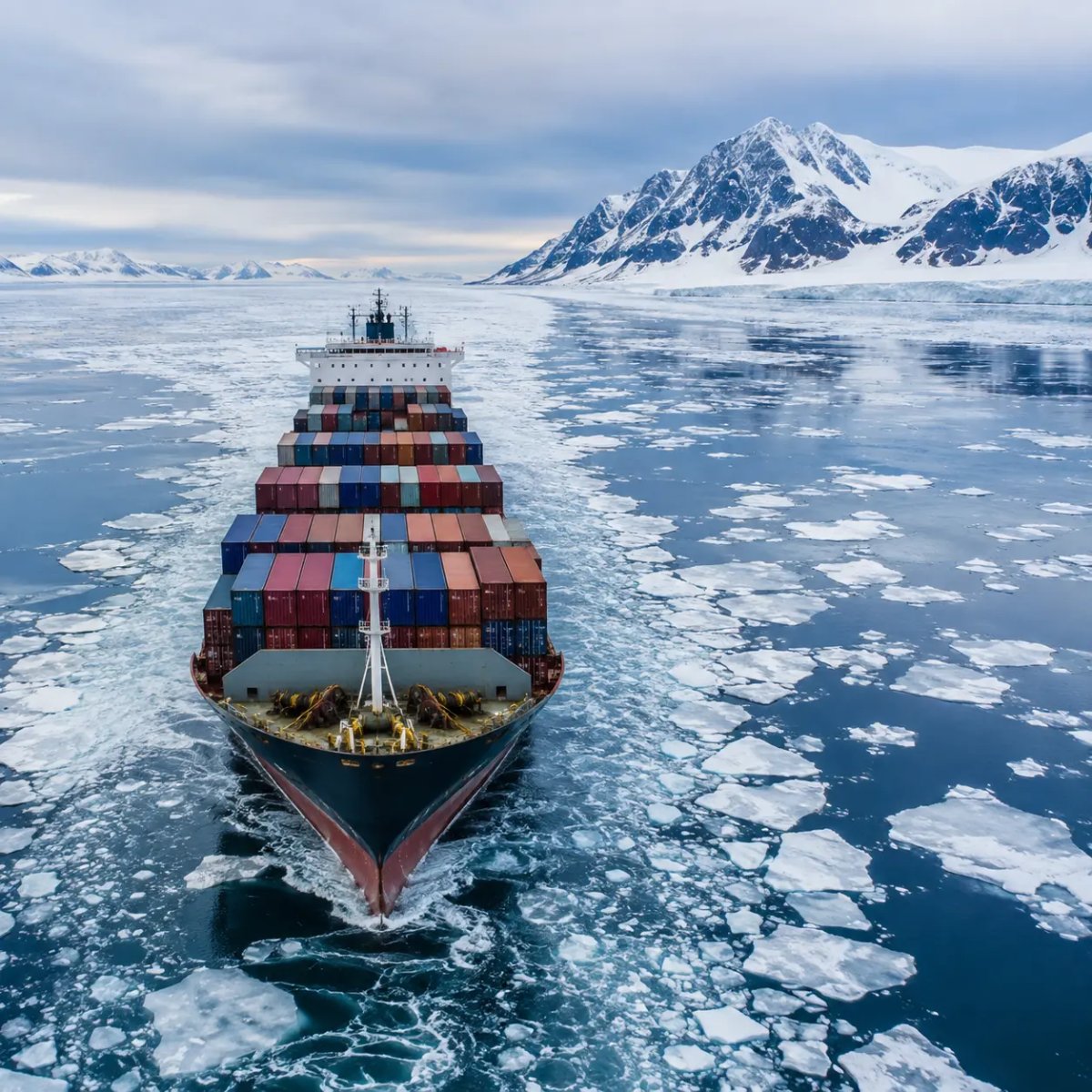
As Polar Ice Recedes, China Is Betting on a New Global Trade Highway
For centuries, the world's most important shipping routes have passed through a handful of strategic chokepoints. The Suez Canal links Europe and Asia. The Strait of Malacca carries a significant share of global trade. The Panama Canal connects the Atlantic and Pacific oceans.
Now, China is investing in a route that bypasses many of them.
As Arctic sea ice continues to decline and technological advances make northern navigation increasingly viable, Beijing is expanding its vision for what it calls the "Ice Silk Road"—a network of Arctic shipping corridors intended to connect Asia and Europe more efficiently. Supporters see the initiative as a transformative development that could reshape international commerce. Critics view it as another stage in an intensifying geopolitical competition for influence in one of the planet's most rapidly changing regions.
The project is still developing, but its implications extend far beyond shipping. It touches on climate change, energy security, military strategy, international law, and the future balance of power in the Arctic.
What Is China's Ice Silk Road?
The Ice Silk Road is an Arctic-focused extension of China's broader Belt and Road Initiative (BRI), the massive infrastructure and connectivity strategy launched by Beijing more than a decade ago.
China formally introduced the concept in 2018 when it published its Arctic policy white paper. Although China is not an Arctic nation, Beijing described itself as a "near-Arctic state" and outlined ambitions to participate in Arctic shipping, scientific research, resource development, and infrastructure projects.
The core idea is relatively straightforward.
Instead of sending ships from East Asia to Europe through the South China Sea, the Strait of Malacca, the Indian Ocean, and the Suez Canal, vessels could travel through Arctic waters along northern routes.
In theory, this could significantly reduce travel distances and transit times between major Asian and European ports.
As climate change reduces seasonal sea ice coverage, these routes are becoming increasingly accessible during longer portions of the year.
China sees an opportunity.
Why Arctic Routes Matter
Global trade depends heavily on maritime transportation.
According to international shipping organizations, roughly 80% of world trade by volume moves by sea. Even small reductions in shipping time can translate into substantial savings in fuel costs, vessel utilization, insurance expenses, and supply-chain efficiency.
One of the most discussed Arctic pathways is Russia's Northern Sea Route (NSR), which runs along Russia's Arctic coastline.
For shipments traveling between northern Europe and East Asia, the route can be thousands of kilometers shorter than traditional passages through the Suez Canal.
Supporters argue that this shorter distance offers several advantages:
- Reduced fuel consumption
- Faster delivery times
- Lower transportation costs
- Diversification of global shipping routes
- Reduced dependence on congested chokepoints
Recent disruptions in traditional trade corridors—including geopolitical tensions, attacks on commercial shipping, and canal bottlenecks—have increased interest in alternative routes.
The Arctic increasingly appears on the strategic map of governments and shipping companies seeking greater resilience.
The Climate Factor Behind the Expansion
Ironically, the Ice Silk Road is becoming possible because of one of the world's most serious environmental challenges.
The Arctic is warming faster than most other regions on Earth.
Scientists have documented significant declines in sea ice extent over recent decades, particularly during summer months. Longer ice-free periods have created new opportunities for navigation, although conditions remain difficult and unpredictable.
This environmental transformation has altered how governments and corporations view the Arctic.
What was once considered largely inaccessible is gradually becoming more navigable.
For shipping companies, that means potential commercial opportunities.
For environmental groups, it raises concerns.
Increased shipping activity could introduce additional pollution, heighten risks of maritime accidents, disturb fragile ecosystems, and accelerate environmental degradation in one of the world's most sensitive regions.
The paradox is difficult to ignore: climate change is creating opportunities that may, in turn, generate new environmental pressures.
China's Growing Presence in the Arctic
Shipping is only one aspect of China's Arctic strategy.
Over the past decade, Beijing has expanded investments in scientific research, satellite infrastructure, polar technology, energy projects, and partnerships with Arctic stakeholders.
Chinese research institutions have increased polar studies, while Chinese companies have participated in energy and infrastructure developments linked to Arctic economies.
Much of China's Arctic cooperation has focused on Russia.
The relationship between Beijing and Moscow has become increasingly important in Arctic development, particularly after Western sanctions complicated Russia's access to certain international financing and technology.
China has emerged as a significant potential partner for Arctic infrastructure, energy exports, and transportation projects.
This cooperation is one reason the Ice Silk Road has attracted close attention from policymakers in Washington, Brussels, Ottawa, and other Western capitals.
Russia's Critical Role
No discussion of the Ice Silk Road is complete without understanding Russia's position.
Russia controls the longest Arctic coastline in the world and views the Northern Sea Route as a strategic national asset.
The Kremlin has invested heavily in Arctic infrastructure, including ports, navigation systems, search-and-rescue facilities, and the world's largest fleet of nuclear-powered icebreakers.
Without Russian cooperation, China's Arctic shipping ambitions would face major limitations.
The partnership offers benefits for both sides.
Russia gains investment opportunities and increased cargo traffic.
China gains access to routes that could shorten trade connections with Europe.
However, the relationship also raises questions about the future governance of Arctic waters and whether increasing cooperation could shift regional power dynamics.
Could Arctic Shipping Rival the Suez Canal?
Not yet.
Despite growing interest, Arctic routes still face significant challenges.
The Suez Canal remains one of the world's most efficient and established shipping corridors. It supports predictable year-round operations and extensive supporting infrastructure.
Arctic shipping faces obstacles that include:
Seasonal Accessibility
Even with declining sea ice, Arctic conditions remain highly variable.
Severe weather, drifting ice, and changing navigation conditions can complicate operations.
Infrastructure Gaps
Many Arctic regions lack the extensive ports, repair facilities, emergency response capabilities, and logistical networks available along traditional shipping routes.
Insurance Costs
Operating in Arctic environments often involves higher insurance premiums due to elevated risks.
Specialized Vessels
Some Arctic operations require ice-class ships designed to withstand challenging conditions.
These vessels are more expensive than conventional cargo ships.
As a result, most experts do not expect Arctic routes to replace traditional shipping lanes anytime soon.
Instead, they are likely to serve as complementary alternatives that become increasingly important under certain conditions.
Why the United States and Europe Are Watching Closely
The Ice Silk Road is not simply a commercial project.
It has strategic implications.
The Arctic has become an area of growing geopolitical interest as nations compete for influence, resources, and transportation access.
The United States has repeatedly emphasized the importance of maintaining stability and openness in the region.
European countries are similarly evaluating how Arctic developments may affect trade patterns, security interests, and environmental policies.
NATO members have increased attention to Arctic security planning in recent years.
As China expands its presence and Russia continues Arctic investments, policymakers are assessing how these developments could influence future strategic balances.
Some analysts worry that infrastructure initially developed for commercial purposes could eventually carry broader geopolitical significance.
Others argue that economic cooperation may encourage stability and shared development.
The debate remains active.
The Economic Opportunities
Supporters of the Ice Silk Road believe its potential extends beyond shorter shipping routes.
Arctic development could create opportunities in:
- Energy exports
- Mineral extraction
- Telecommunications infrastructure
- Scientific collaboration
- Logistics services
- Port development
- Maritime technology
The Arctic is believed to contain substantial reserves of oil, natural gas, and critical minerals.
As global demand for resources grows, access to these reserves may become increasingly important.
China's long-term planning frequently focuses on securing supply chains and diversifying transportation networks.
The Arctic aligns with both objectives.
Environmental Concerns Remain Central
Environmental organizations continue to urge caution.
The Arctic ecosystem is uniquely vulnerable.
Oil spills, shipping accidents, underwater noise pollution, and increased industrial activity could have long-lasting consequences.
Search-and-rescue operations in remote Arctic waters can also be challenging due to harsh conditions and limited infrastructure.
Climate researchers warn that economic enthusiasm should not overshadow environmental responsibilities.
Many advocate stronger international safeguards to ensure that commercial development does not outpace environmental protections.
This tension between economic opportunity and environmental preservation is likely to define Arctic policy discussions for years to come.
What Happens Next?
The future of the Ice Silk Road will depend on several factors.
Climate trends will influence navigability.
Geopolitical relationships will affect cooperation.
Technological advances may improve Arctic shipping capabilities.
Economic conditions will determine whether companies view Arctic routes as commercially attractive.
China's continued investment suggests that Beijing sees long-term strategic value in maintaining a presence in the region regardless of short-term fluctuations.
Shipping volumes remain relatively small compared with traditional trade corridors, but the trajectory is clear: Arctic routes are becoming more relevant than they were a decade ago.
The Bigger Picture
The expansion of China's Ice Silk Road illustrates how climate change is transforming global geopolitics in unexpected ways.
A region once viewed primarily as a frozen frontier is increasingly becoming a stage for economic competition, strategic planning, and international cooperation.
Whether the Arctic eventually becomes a major commercial highway or remains a niche shipping alternative, its importance is growing.
For China, the Ice Silk Road represents more than a transportation project. It is part of a broader effort to diversify trade routes, strengthen global connectivity, and secure a role in shaping the future of Arctic development.
For the rest of the world, the initiative serves as a reminder that the geography of global trade is not fixed. As environmental conditions evolve and geopolitical priorities shift, new corridors can emerge where none seemed possible before.
The Arctic's transformation is still unfolding. But one thing is becoming increasingly clear: decisions made in the world's northernmost waters may influence the future flow of global commerce for decades to come.
What's Your Reaction?
 Like
0
Like
0
 Dislike
0
Dislike
0
 Love
0
Love
0
 Funny
0
Funny
0
 Wow
0
Wow
0
 Sad
0
Sad
0
 Angry
0
Angry
0

The Excuse Alliance is an independent digital news platform covering India’s latest developments in politics, business, technology, society, economy, and public affairs. Our mission is to provide accurate, fact-based, and trustworthy journalism that keeps readers informed about the issues shaping India.







Comments (0)